
Arisaka Rifle Markings: A Field Guide to Arsenals & Series Numbers.


The markings on a Japanese military rifle tell a story
At first glance, the collection of Japanese characters, symbols, numbers, and stamps found on an Arisaka rifle can seem confusing. To the experienced collector, however, these markings provide a remarkable amount of information. They can identify the arsenal or manufacturer responsible for a rifle, indicate its production series, place it within Japan's military manufacturing system, and help determine whether its features are consistent with its original production.
Understanding these markings is one of the most useful skills a collector of Japanese military firearms can develop. They can help identify a rifle, establish its approximate production period, and sometimes reveal whether a rifle has been repaired, refurbished, or assembled from components produced at different times.
This guide explains the most common arsenal and production markings found on Japanese military rifles, with particular emphasis on the Type 38 and Type 99 Arisaka rifles of the Second World War.
Reading the Receiver
The left side of an Arisaka receiver is often where the most important identifying information can be found.
On a typical rifle, a collector may encounter several different markings in a relatively small area:
Series mark
Serial number
Arsenal or manufacturer mark
Inspection marks
Second Class or Supervisory marks

The exact arrangement varies depending on the rifle, manufacturer, and period of production. This is important because there is no universal marking system that can be applied identically to every Japanese military rifle.
The series mark and serial number, for example, are not simply two independent numbers. Together with the arsenal mark, they can provide a much clearer picture of where and when the rifle was produced.
The Imperial chrysanthemum found on the top of the receiver is another important feature, but it should not be confused with an arsenal mark. The chrysanthemum was an Imperial property mark and is a separate part of the rifle's identification.
What Is an Arsenal Mark?

An arsenal mark identifies the organization responsible for the rifle's production or the military arsenal supervising its manufacture. This distinction is important. Japanese military rifle production was not limited to a handful of factories in a modern sense. Government arsenals supervised an increasingly complicated network of production as Japan expanded its military manufacturing capacity during the 1930s and 1940s. Some rifles were manufactured directly by government arsenals. Others were produced by commercial companies operating under military supervision. As a result, the mark on a rifle does not always mean that every component was physically manufactured at the facility represented by that symbol. This becomes particularly important when studying the Type 99.
During the war, production involved government arsenals as well as companies such as Toyo Kogyo, Howa, Izawa, and Tokyo Juki. Contemporary and later references therefore often describe these organizations as arsenals, manufacturers, or subcontractors depending on the context. For the collector, the important point is that the arsenal/manufacturer mark is one part of a larger identification system.
The Major Japanese Rifle Arsenals
Several major arsenals and supervised manufacturers are encountered repeatedly on Japanese military rifles.
Tokyo and Kokura arsenal
The Tokyo Army Arsenal, also known as the Koishikawa Arsenal, was one of Japan's earliest and most important military arsenals. The facility operated under the Tokyo/Koishikawa designation until 1935, after which rifle production was associated with the Kokura Army Arsenal. Both are represented by the familiar three-circle or "stacked cannonball" symbol. This can create confusion for new collectors because the same basic arsenal symbol can represent two different facilities depending on the period. The distinction between Tokyo and Kokura therefore cannot always be made simply by looking at the arsenal symbol. The rifle's series, serial number, production period, and other markings must also be considered. Reference works generally place Koishikawa/ Tokyo rifle production from 1870 to 1935 and Kokura rifle production from 1935 through 1945.

Nagoya arsenal
The Nagoya Army Arsenal was another major center of Japanese rifle production. Nagoya produced large numbers of Type 38 rifles and carbines and later became one of the principal manufacturers of the Type 99. Nagoya rifles are particularly recognizable by their distinctive arsenal symbol, but once again, the mark should be considered alongside the rifle's series and other characteristics rather than used by itself. Nagoya's production extended throughout much of the prewar and wartime period, making it one of the most frequently encountered manufacturers among Japanese military rifle collectors.

Jinsen arsenal
The Jinsen Army Arsenal was located at Jinsen, Korea, now known as Incheon. Jinsen was established as part of Japan's expanding military-industrial infrastructure in Korea and produced Japanese military rifles, including the Type 38 and Type 99. Jinsen rifles are especially interesting to collectors because production was comparatively limited compared with the major Japanese arsenals, and examples can display distinctive combinations of arsenal, series, and inspection markings. Jinsen's production history also illustrates the increasingly international character of Japan's military manufacturing system during the Second World War.

Mukden arsenal
The Mukden Arsenal, also known as the Hoten Arsenal, was located in Manchuria. It produced Japanese military rifles under Japanese control, including Type 38 and Type 99 rifles.
The arsenal's production is particularly significant because it demonstrates that Japanese military firearms manufacturing extended beyond the Japanese home islands. The Mukden facility became an important part of Japan's arms-production network in occupied Manchuria. The Mukden arsenal did not use series markings during Type 38 rifle production, and are instead only serialized.

Toyo Kogyo
Toyo Kogyo is one of the most interesting names encountered by collectors of Type 99 rifles.
The company was a commercial manufacturer rather than one of the traditional government arsenals, but it produced rifles under military supervision. Toyo Kogyo manufactured both Type 99 Long Rifles and Short Rifles and became an important contributor to Japanese rifle production during the war. For collectors, Toyo Kogyo is particularly notable because the company later became Mazda. Finding a Mazda connection stamped into a Japanese military rifle is therefore one of the more interesting pieces of industrial history associated with the Type 99.

Howa Jyuko
Howa Gun Manufacturing also produced Type 99 rifles during the war. Like Toyo Kogyo, Howa was a commercial manufacturer operating within Japan's military production system rather than simply being a traditional government arsenal. Howa produced Type 99 Short Rifles, and its rifles are identifiable through their distinctive arsenal/manufacturer markings when combined with the appropriate series and production characteristics.

Izawa Jyuko
Izawa Firearms Factory, also associated with Dai Nippon Juho, produced Type 99 Short Rifles during the war. Izawa examples are less commonly encountered than rifles from the largest arsenals, making correctly identified examples particularly interesting to collectors.
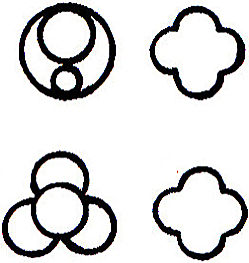
Tokyo Juki Kogyo
The Tokyo Juki Manufacturing Association also participated in Type 99 production during the later wartime period. Its inclusion in the production system is another reminder that the Japanese military increasingly relied upon commercial and supervised manufacturing organizations as the war progressed.
A Quick Reference
The major organizations associated with Japanese military rifle production include:
Arsenal / Manufacturer | Approximate rifle production period | Type 38 Production Series | Type 99 Production Series |
Koishikawa / Tokyo / Kokura Arsenal | 1870–1945 | 20, 22, 23, 24, 25, 26 | 20, 21, 22, 23, 24, 25 |
Nagoya Arsenal | 1923–1945 | 26, 27, 28, 29 | No series, 1, 2, 3, 4, 5, 6, 7, 8, 10, 11, 12 |
Jinsen Arsenal | 1923–1945 | 30 | 40 |
Mukden Arsenal | 1931–1945 | No series markings, only serial numbers. | 45 |
Toyo Kogyo | 1939–1945 | 30, 31, 32, 33, 34, 35 | |
Tokyo Juki Kogyo | 1940–1945 | 27, 37 | |
Howa Jyuko | 1940–1945 | 9 | |
Izawa Jyuko | 1940–1945 | 4, 9 |
These dates are useful as broad production ranges, but they should not be treated as precise dating tools for an individual rifle. Production overlapped, markings changed, and the Japanese military manufacturing system became increasingly complicated as the war progressed.
The Series Mark
One of the most commonly misunderstood markings on an Arisaka is the series mark.
Japanese military rifles were generally produced in numbered series, with each series representing a particular block of production. On many rifles, the series is represented by a Japanese katakana character enclosed within a circle. The series mark is extremely useful to collectors because it can help distinguish rifles made by the same arsenal at different points in its production history. It is also one reason that identifying an arsenal from its symbol alone can be misleading. For example, the familiar three-circle symbol can represent either the earlier Tokyo/Koishikawa Arsenal or the later Kokura Arsenal. The series marking and other characteristics are necessary to determine which production period an individual rifle belongs to. The series, serial number, and arsenal mark should therefore be read as a single group rather than as unrelated pieces of information.

Serial Numbers
The serial number provides another important piece of the puzzle. Japanese military rifles were assigned serial numbers within their respective production series. On a typical rifle, the serial number appears between the series designation and arsenal mark. The serial number by itself generally does not tell the collector exactly when the rifle was produced. Instead, it becomes useful when combined with the series and manufacturer. A rifle marked with a particular series and a particular arsenal can often be placed within a much narrower production period than the serial number could provide by itself. This is particularly valuable when researching Type 99 rifles, where production characteristics changed considerably during the war. Unfortunately, most production data was lost due to allied firebombing during the Second World War. Arisaka serial numbers and series markings can only give us an estimated production date.

Why the Arsenal Mark Matters
The arsenal mark is more than a manufacturer's logo. It can provide important historical context. A rifle made at Nagoya represents a different portion of Japan's industrial system than one produced at Jinsen or Mukden. A Type 99 made by Toyo Kogyo illustrates the growing role of commercial industry in Japanese military production. A late-war rifle from one of the major manufacturers may display radically different manufacturing characteristics from an early-war example from the same organization. The markings therefore help tell the story of the rifle itself. They can also help the collector determine whether the rifle's physical characteristics make sense for its claimed production period.
The Arsenal Mark Doesn't Tell You Everything
This is one of the most important lessons for anyone collecting Japanese military rifles: Never identify a rifle based on a single marking. Arsenal marks, series numbers, serial numbers, inspection marks, receiver features, stock characteristics, finish, and manufacturing methods should all agree with one another. A rifle may have been repaired during its military service. Parts may have been replaced. Receivers and other components may have been refinished or modified after the war. Consequently, an arsenal mark tells you where the receiver was associated with a particular production organization, but it does not necessarily tell you the complete history of every component on the rifle. This is especially important when examining rifles that have been heavily used or modified.
Arsenal Marks and the Type 38 and Type 99
The Type 38 and Type 99 are the two Japanese rifles most commonly encountered by collectors today. The Type 38 was introduced in 1905 and remained Japan's primary infantry rifle for decades. The Type 99 followed in 1939, chambered for the more powerful 7.7×58mm cartridge. Both rifles were produced by multiple arsenals and manufacturing organizations, making arsenal markings important for identifying where and when a rifle was made.
The Type 99 is especially interesting because its production reflects Japan's changing industrial situation during the war. Early examples can feature excellent workmanship and equipment such as chrome-lined bores, dust covers, monopods, and anti-aircraft sights. As the war progressed and materials and manufacturing capacity became limited, many of these features were eliminated. Late-war rifles can have rough finishes and highly simplified construction.
By studying the arsenal mark alongside the rifle's physical features, collectors can determine whether a rifle's configuration is appropriate for its manufacturer and period of production. This makes Japanese rifle collecting more than simply identifying a model—it allows the collector to see the industrial history of wartime Japan reflected in the rifle itself.
Why These Markings Matter to Collectors
For the beginning collector, an arsenal mark may simply answer the question: "Who made this rifle?"
For the experienced collector, it can answer much more.
The markings can help establish:
Who manufactured or supervised the rifle
Which production series it belongs to
Its approximate period of manufacture
Whether its physical features are appropriate for that production period
Whether components may have been replaced
Whether a rifle has been modified or refurbished
How the rifle fits into the larger history of Japanese wartime production
That information can have a significant effect on a rifle's historical significance and, in some cases, its desirability to collectors.
A Collector's Approach
When examining an unfamiliar Japanese rifle, start with the receiver. Identify the model, then record the series mark, serial number, arsenal or manufacturer mark, inspection marks, and Imperial chrysanthemum.
Next, examine the rifle itself. Does the finish match the apparent production period? Is the rear sight appropriate? Does the dust cover, stock, buttplate, and other components match what would be expected from that manufacturer and period? Look for machining and manufacturing characteristics that support your identification. The more pieces of evidence that agree, the more confident you can be in your conclusions. A rifle should never be identified by a single marking alone.
Japanese arsenal markings are among the most useful tools available to the collector of Imperial Japanese military firearms. What may initially appear to be a confusing collection of symbols is actually a detailed record of Japan's military manufacturing system. These markings can identify an arsenal or manufacturer, establish a production series, help narrow the rifle's date of manufacture, and provide clues about its original configuration. More importantly, they connect individual rifles to the larger story of Japanese industrial production during the period.
From the major government arsenals at Tokyo, Kokura, and Nagoya to facilities such as Jinsen and Mukden and commercial manufacturers such as Toyo Kogyo and Howa, Japanese military rifles were produced through a vast and increasingly complex network. Learning to read these markings allows collectors to see that history in the rifle itself.
The next time you pick up an Arisaka, don't just look at the model. Look at the markings. They may tell you much more than you think.


Comments